


It is visible to the naked eye, on any walk through the cities, how the metallic structures have revolutionised the world of modern construction. The fundamental reasons for this transformation are its versatility, strength and efficiency.
From the skyscrapers that shape city skylines to the logistics warehouses that move the pulse of industry, the use of metal as the main structural element has established itself as one of the most important smarter choicesfor both large-scale and smaller-scale projects.
It is worth asking, in any case, whether we really know what types of metal structures exist and in what contexts they are used. The aim of this article is to explore the main metallic structural typologies, their advantages and the scenarios in which they offer the best performance, taking as a reference the experience of leading companies in the sector, such as Ingea Innovawhere we have been providing efficient and customised solutions in this area for years.
1. Cross-linked structures (lightness and efficiency)
Also known as triangulated structures or metal trusses, they are formed by bars joined in the form of triangles, which allows the loads to be distributed efficiently..
It is a geometric design whose triangulation ensures stability, minimises the risk of deformation and reduces the overall structural weight.
They are especially useful when large spans need to be covered without intermediate supports, as in:
- Industrial buildings
- Pedestrian or vehicular bridges
- Sports roofs
- Hangars and logistics warehouses
This type of structure stands out for its low own weight in relation to the load-bearing capacity they can withstandThis reduces the need for heavy foundations. In addition, it allows for modular construction, facilitating transport and assembly.

In cases such as those developed by Ingea Innova in logistics complexes, the reticulated solution has been key to reducing execution times and guaranteeing total accessibility.without pillars interrupting the usable space. This type of structure is also common in pavilion roofs, where the absence of intermediate columns improves the functionality of the enclosure.
2. Metal portal frames: robustness for modular buildings
This is one of the most common structural systems in steel construction. It consists of rigid frames forming the load-bearing structure of rectangular buildingsusually with pitched roofs. This system is characterised by combining structural simplicity with excellent resistance to vertical and horizontal loads.
This is one of the most common structural systems in steel construction. It consists of rigid frames forming the load-bearing structure of rectangular buildingsusually with pitched roofs. This system is characterised by combining structural simplicity with excellent resistance to vertical and horizontal loads.
One of its major advantages is the modularitywhich allows the structure to be easily expanded or modified. Added to this is a remarkable speed of executionideal for sites that need fast delivery without sacrificing quality.
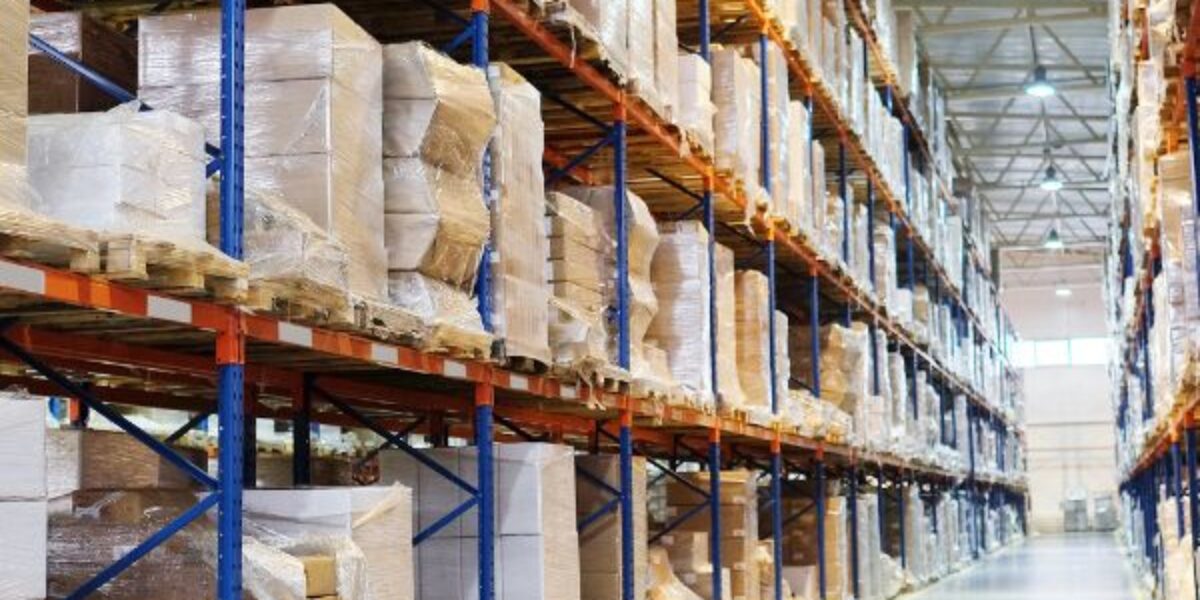
In addition, the gantries allow a good use of interior spaceThis is especially valued in industrial projects. Ingea Innova has implemented double-height porticoes in mixed buildings (warehouse + offices), integrating natural lighting solutions using translucent panels and passive ventilation systems.
3. Three-dimensional spatial frameworks: solutions for the large scale
When there is a need to build spaces without visual or structural restrictions, such as stadiums, auditoriums or transport stations, the three-dimensional spatial structures come into play. They are systems composed of metal nodes and rods that form a three-dimensional framework of high rigidity and strength.
Its main benefits are:
- High capacity to cover large areas without interior columns
- Structural stability in all directions
This type of solution requires a more complex detailed engineering and precise planning during the construction phase. In these cases, the design phase is particularly important, as small errors can have a significant impact on the installation.
Ingea Innova has shown that, thanks to the use of BIM modelling tools and load simulation in a 3D environmentIn this way, it is possible to anticipate any incident and optimise both manufacturing and on-site assembly.
4. Lattice structures: tradition with high performance
The metal lattices are structures composed of cords (upper and lower) and diagonals forming a kind of light but strong skeleton. Their behaviour under horizontal and vertical loads makes them ideal for specific applications such as:
- Rail and road bridges
- Electrical transmission or telecommunication towers
- Cranes and heavy machinery
- Modular footbridges or viaducts
What makes these structures stand out is their excellent weight/load capacity ratioand the possibility of be manufactured in tranches which are then assembled on site. This aspect is key on sites that are difficult to access or where assembly must be carried out under limited conditions.

While some firms continue to use traditional methods, companies such as Ingea Innova have incorporated robotic welding technology, non-destructive quality control and hot-dip galvanising to ensure durability and strengtheven in saline or high humidity environments.
5. Mixed structures: the best of two worlds
These structures combine steel with concrete or other materialsThe best of each can be used. For example, metal columns can be used with reinforced concrete slabs, or steel beams with composite slabs. In this way, an ideal synergy is achieved to optimise the design in both structural and functional terms.
Where do they apply?
- Office buildings and educational establishments
- Hospitals and health centres
- Multi-storey car parks
- Rehabilitation and structural reinforcement

These structures offer great architectural flexibilityThe new, cost-optimised, high-speed, high-speed systems are particularly useful on urban construction sites where construction rates are demanding and margins for manoeuvre are tight.
Thanks to advanced engineering, firms such as Ingea Innova have taken this type of solutions to the next level, applying them even in integral renovation projects where the aim is to to lighten the structural load without compromising the original load-bearing capacity.
6. Self-supporting towers and structures: vertical stability
In fields such as wind energy, public lighting or telecommunications, the following are required free-standing vertical structuressuch as metal towers or masts, designed to withstand wind loads, self-weight and extreme conditions. Here, the lightness of the steel and its ability to withstand bending stresses is crucial.
Typical applications:
- Telecommunication towers
- Lighting masts
- Wind towers
- Supports for billboards and urban signage
These structures, although less visible to the general public, require a high specialisation. Knowledge of anchoring, structural dynamics and anti-corrosion galvanisation is key.

In addition, the design of this type of structure must take into account the possibility of maintenance at heightIt is therefore common to incorporate interior stairways, inspection platforms and anti-fall safety systems.
Steel, a material that builds the future
In short, each type of metal structure responds to specific needs, but they all share a common denominator: their adaptability. In an environment where deadlines are shortened, energy efficiency is a priority and architectural aesthetics gain weight, metallic solutions are consolidating as one of the best choices. of the present and the future.
The use of steel not only makes it possible to respond effectively to today's structural challenges, but also opens the door to new possibilities in terms of sustainability and reuse. Your 100 % recyclability % makes it a key material for a more conscious and environmentally friendly construction.
About us
In this context, the role of companies such as Ingea Innova is not only about designing and manufacturing structures, but also about interpret the needs of each client and transforming these ideas into tangible solutionssafe and durable. With a comprehensive approach, ranging from engineering and structural calculation to manufacturing and assembly, they have established themselves as a benchmark in a sector that increasingly requires precision, agility and long-term vision.
At Ingea InnovaWe have years of experience in the design, construction y maintenance from metal structures. Our commitment is to offer durable solutions and efficient solutions that adapt to every need. If you need advice or specialised services, do not hesitate to contact us.
Together, we build a stronger future.
- 05/11/2025in Construction
INNOVA and the EN 1090 standard: total commitment to structural quality
In the steel construction sector, quality and safety are not optional. Since 2014, all metal structure manufacturers in Europe must comply with the EN 1090 Standard, an essential requirement to be able to market their products within the European Union. In this article we explain what EN-1090 certification is, what it is,... - 04/09/2025in Construction
Repair and reconstruction of metal roofs on car parks
Metal enclosures in industrial car parks are essential to protect vehicles and equipment from the elements, as well as to maintain structural efficiency. Over time, these covers can deteriorate due to exposure to weather, corrosion or impact, compromising their functionality and safety. At Ingea Inn...