

Intelligent bio-construction: Nature and technology hand in hand

Imagine a house built with earth, wood and lime, a shelter that breathes, that regulates its temperature without the need to turn on an air conditioner, and which also alerts you when it needs to be ventilated or when it detects moisture on a wall.. It's not science fiction, it's the new frontier of architecture, known as the intelligent bio-constructionan approach that fuses natural materials with state-of-the-art sensors to take care of both the building and the people who live in it. This type of construction represents a logical and necessary evolution of sustainable architecture. It is based on returning to age-old techniques, such as the use of mud or straw, but adding something that we didn't have before, such as the technology that observes, interprets and helps us to make decisions. The result is more efficient and also more humane.
Back to the natural without renouncing the intelligent
For years, bio-construction has been identified with rural houses, adobe domes or low environmental impact projects far from cities. But this is changing. Today, with the help of the Internet of Things (IoT), these constructions can be as sophisticated as any high-tech building.They do not seek to dominate the environment, but to coexist with it.
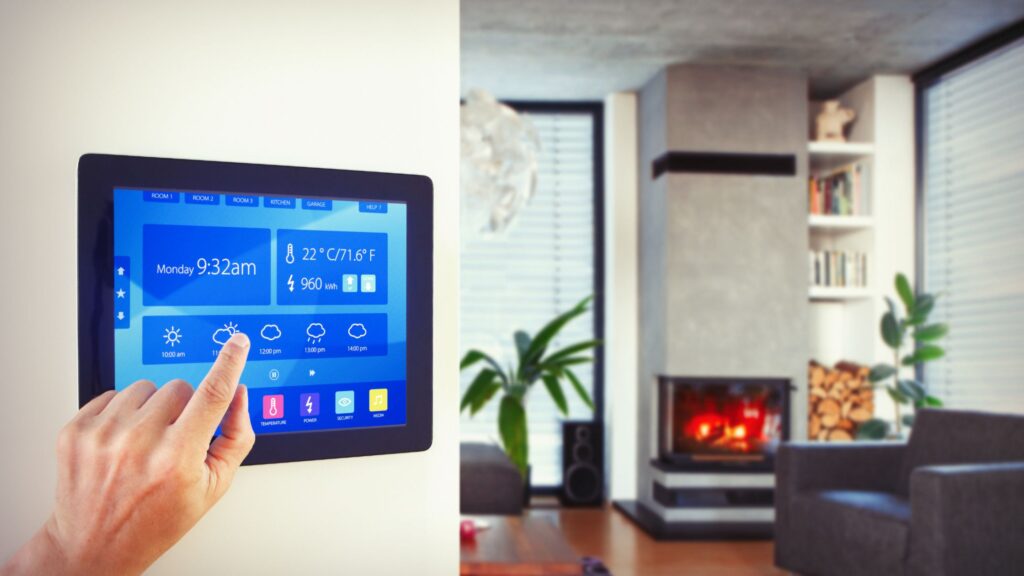
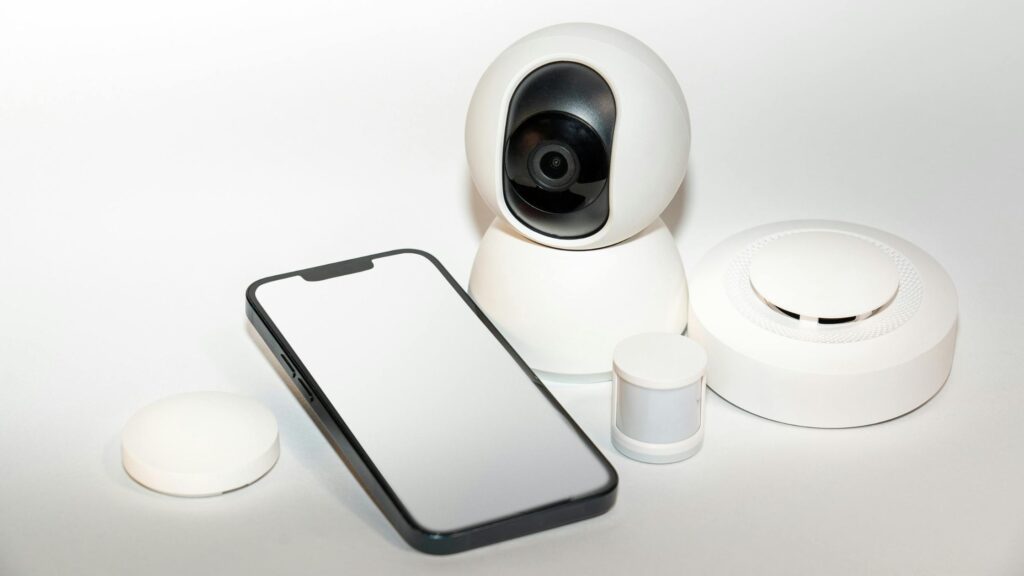
The IoT sensors allow homes to "listen" to what is going on inside them and their structure. They can detect changes in humidity, measure air quality, record temperatures and send you an alert to your mobile phone if something is wrong. And they do it almost invisibly, without altering the aesthetics or the soul of a home made of natural materials. Because if there is one thing that defines this trend, it is balance, technology to be useful, but not invasive. That adds, without detracting from authenticity.
What can a house built of straw tell us?
More than you might think. In a concrete building, detecting a leak or a lack of ventilation can be a matter of luck. In a bio-built home, such problems can lead to serious deterioration if not detected in time. This is where sensors come into play.
- Moisture sensor in wallsEssential in houses made of mud, straw or wood. They detect possible condensation or leaks, long before mould appears or the structure is damaged. They are like an early warning system that allows action to be taken before it is too late.
- CO₂ and Indoor Air Quality MetersAlthough natural materials do not emit toxic substances, this does not mean that the indoor air is always healthy. A sensor may, for example, indicate that there is too much CO₂ in a closed room and suggest opening a window.
- Smart thermometersIn a well-oriented and insulated house, a heating or cooling system is often not necessary. But having sensors that inform you of how each zone of the home behaves thermally is useful for adjusting blinds, windows or mobile elements. In the long term, it helps to optimise comfort and reduce consumption.
- Accelerometers or structural motion sensorsThey warn of micro-cracks, displacements or differential settlement of the ground. You don't have to wait for a wall to crack to know that something is wrong.
And all this can be controlled from a simple app on your mobile phone. You don't need to be an engineer. The idea is that the user receives clear and practical information: "ventilate the room", "there is humidity on the north wall", "the temperature is optimal, it is not necessary to turn on the cooker".. It's as if the house is talking to you..., but without raising its voice.
Technology at the service of life, not the other way around
One of the great fears when talking about "smart homes" is to fall into over-automation. No one wants to live in a kind of laboratory, but in smart bio-construction, the approach is different, since it is not about delegating everything to technology, but about using it as a silent ally..
The sensors are small, unobtrusive and many are powered by long-life batteries or solar systems. They are integrated during construction or placed in strategic points without cables, without building work, without breaking the aesthetics. And, above all, they make house maintenance much easier and more economical. Because we know how each material, each wall and each corner behaves, it is possible to anticipate problems, instead of solving them when it is already too late.
A house that takes care of itself... and that takes care of you.
Living in a house built with mud, straw or wood is not only an aesthetic or ecological choice. It is also a way of seeking real welfare because it has less toxins, better insulation and more contact with nature. And if that house, in addition, helps to maintain these values over time, the benefit is double.
Some of the most obvious results of applying technology to bio-construction are:
- Increased durability: Detecting problems before they become serious extends the life of natural materials.
- Better inner healthReal-time data lets you know if the air you breathe is clean or if you need to refresh the environment.
- Energy savingBy understanding how your house behaves thermally, you can optimise its use without overspending.
- Reduced environmental impactBecause the less you intervene in your home, the less resources you consume and the less waste you generate.
And the best thing is that you don't need a complex home automation system, just well thought-out sensors and a design that integrates them from the start.
Case studies: When theory becomes home
In Spain, there are already bioclimatic dwellings that integrate low-cost sensors to monitor humidity in mud walls, temperature in green roofs or even CO₂ levels in rooms without cross-ventilation. In Galicia, some architects have started to use sensors to study the thermal behaviour of straw bale walls, adapting their designs according to the data collected. In France and Germany, many ecologically refurbished rural houses include sensors connected to their biomass cookers to fine-tune their use. What is most interesting about these examples is that they are not laboratory prototypesbut real homes, inhabited by real people, confirming that the future of construction lies in learning to measure what cannot be seen... in order to improve what can be felt.
For intelligent bio-construction to become a common practice, we need more than just technology, we need to courageous, educated and change-sensitive professionals. Architects who integrate sensors from the design stage, engineers who are as excited about calculating a structure as they are about interior comfort, and technicians who understand that not everything natural is at odds with innovation.
At Ingea Innova we are committed to Sustainable Innovation. For example, our roof equipped with photovoltaic system and our Carbon Footprint reduction programme are examples of smart solutions that integrate perfectly with this philosophy. Visit our section on About us to get to know us and our work.
The new role of the architect and the engineer
Because, in the end, building with mud and sensors is not a contradiction. It is a statement of principle. A way of saying: We do want comfort, but not at the expense of the planet. We do want technology, but at the service of the human. In short, the Intelligent bio-construction is neither a fad nor a utopia. It is the logical step of a society that has understood that we cannot go on building as if resources were infinite. It is the answer to those seeking quality of life, environmental health and real efficiency. And, above all, it is a path open to new ways of inhabiting the world, more conscious, more connected and, yes, much more humane too.